
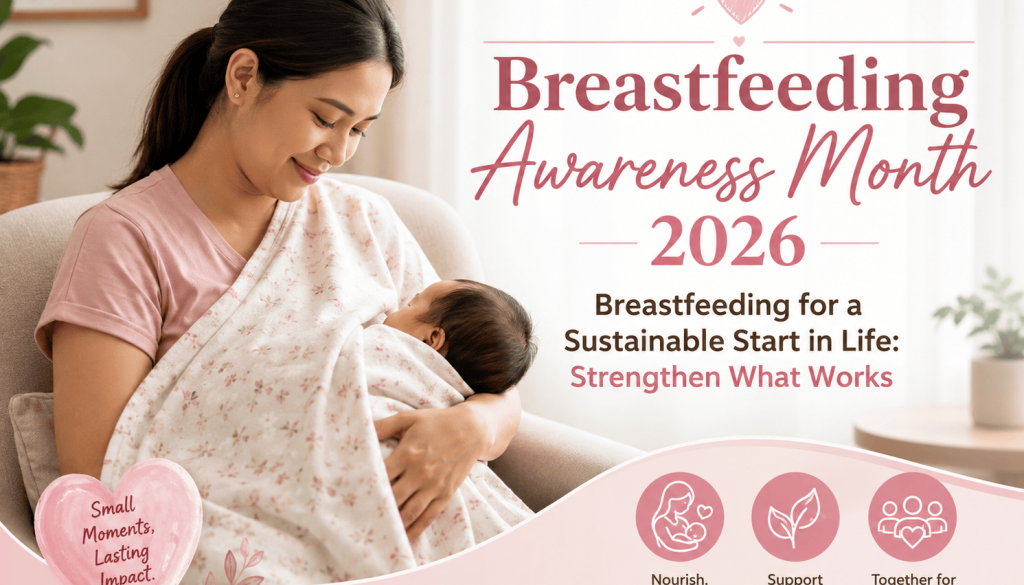
Breastfeeding Awareness Month 2026: Strengthening Support for Mothers and Babies
Every August, Breastfeeding Awareness Month highlights the importance of supporting mothers, babies, and families throughout the breastfeeding journey.
World Breastfeeding Week is observed from 1–7 August, with the 2026 theme:
“Breastfeeding for a Sustainable Start in Life: Strengthen What Works”
This theme recognises that breastfeeding support should not rest on mothers alone. Families, healthcare professionals, hospitals, workplaces, and communities can all help create an environment where mothers feel informed, respected, and supported.
Every feeding journey is different. Some mothers may breastfeed exclusively, some may combine feeding methods, and others may be unable or advised not to breastfeed. The most important approach is one based on accurate information, professional guidance, and compassion.
Support Can Begin Before Birth
Pregnancy is an ideal time for families to learn about breastfeeding and prepare for the first days after birth.
Expectant parents may benefit from learning about:
- Skin-to-skin contact
- How milk production begins
- Feeding positions and attachment
- Expressing breast milk
- Where to seek help if feeding becomes difficult
Preparing early can help families feel more confident and understand what support may be available through hospitals, healthcare providers, lactation professionals, and community services.
Interesting Breastfeeding Facts
1. Colostrum is the first breast milk
The first milk produced after birth is called colostrum. It is often thicker than mature breast milk and may appear yellow or golden.
Colostrum contains concentrated nutrients and protective components that help support a newborn during the first days of life.
2. Breast milk changes over time
Breast milk is not always exactly the same. Its composition changes as a baby grows and may also vary during an individual feed.
These natural changes help meet a baby’s changing nutritional needs.
3. Exclusive breastfeeding includes no additional water
Exclusive breastfeeding means a baby receives only breast milk, without other food or water, unless medicines, vitamins, minerals, or other products are medically recommended.
For most healthy babies, exclusive breastfeeding provides the food and fluids they need during the first six months, without additional water. Individual medical advice may differ.
4. Support can make a real difference
Breastfeeding may be influenced by many factors, including birth circumstances, maternal and infant health, feeding technique, rest, workplace arrangements, family support, and access to professional guidance.
Support can be practical. Preparing meals, helping with older children, providing a private space to express milk, or listening without judgement can all make a meaningful difference.
5. Breastfeeding continues to provide nutrition after six months
From around six months, babies begin to need appropriate complementary foods alongside breast milk.
Breastfeeding can continue to provide nutrition and comfort as a child grows, depending on the needs and preferences of the mother and child.
Prenatal Care and Informed Preparation
A healthy start begins during pregnancy through regular prenatal care, reliable health information, and open conversations with qualified healthcare professionals.
Some expectant families may also discuss non-invasive prenatal genetic screening, commonly known as NIPT, with their healthcare provider.
NIPT uses a blood sample from the expectant mother to estimate the likelihood of selected chromosomal conditions, including Down syndrome, Edwards syndrome, and Patau syndrome.
It is important to understand that NIPT is a screening test, not a diagnosis. A higher-likelihood result should be discussed with a healthcare professional, who may recommend diagnostic testing. A lower-likelihood result cannot rule out every chromosomal, genetic, or health condition.
Prenatal genetic screening does not predict breastfeeding success, milk supply, attachment, or a baby’s complete future health. It is simply one possible part of informed prenatal care.
EasyDNA Philippines provides access to non-invasive prenatal genetic screening. According to the EasyDNA Philippines website, the maternal blood sample must be collected by a qualified GP or pathologist. Results and pregnancy concerns should always be discussed with a doctor, obstetrician, or genetic counsellor.
Strengthening What Works
The 2026 Breastfeeding Awareness Month message is not about placing more pressure on mothers. It is about strengthening the support systems that help families.
These may include:
- Respectful prenatal education
- Skilled breastfeeding guidance
- Supportive partners and relatives
- Mother-and-baby-friendly hospitals
- Workplace lactation spaces
- Community health programs
- Access to qualified medical advice
When families receive accurate information and practical support, they are better placed to make informed decisions that suit their individual circumstances.
A Healthy Start Is a Shared Responsibility
Breastfeeding Awareness Month reminds us that supporting mothers and babies is a shared responsibility.
A healthy beginning may include prenatal care, informed screening choices, breastfeeding education, newborn healthcare, family encouragement, and access to professional support.
By strengthening the services and support systems that already work, communities can help more Filipino families begin their journey feeling informed, prepared, and respected.
This article is provided for general educational purposes only and does not replace medical advice, diagnosis, or treatment. Breastfeeding concerns, pregnancy care, and prenatal screening decisions should be discussed with an appropriately qualified healthcare professional.